5 May 2026
•
6 min read
What can't AI do for your business?
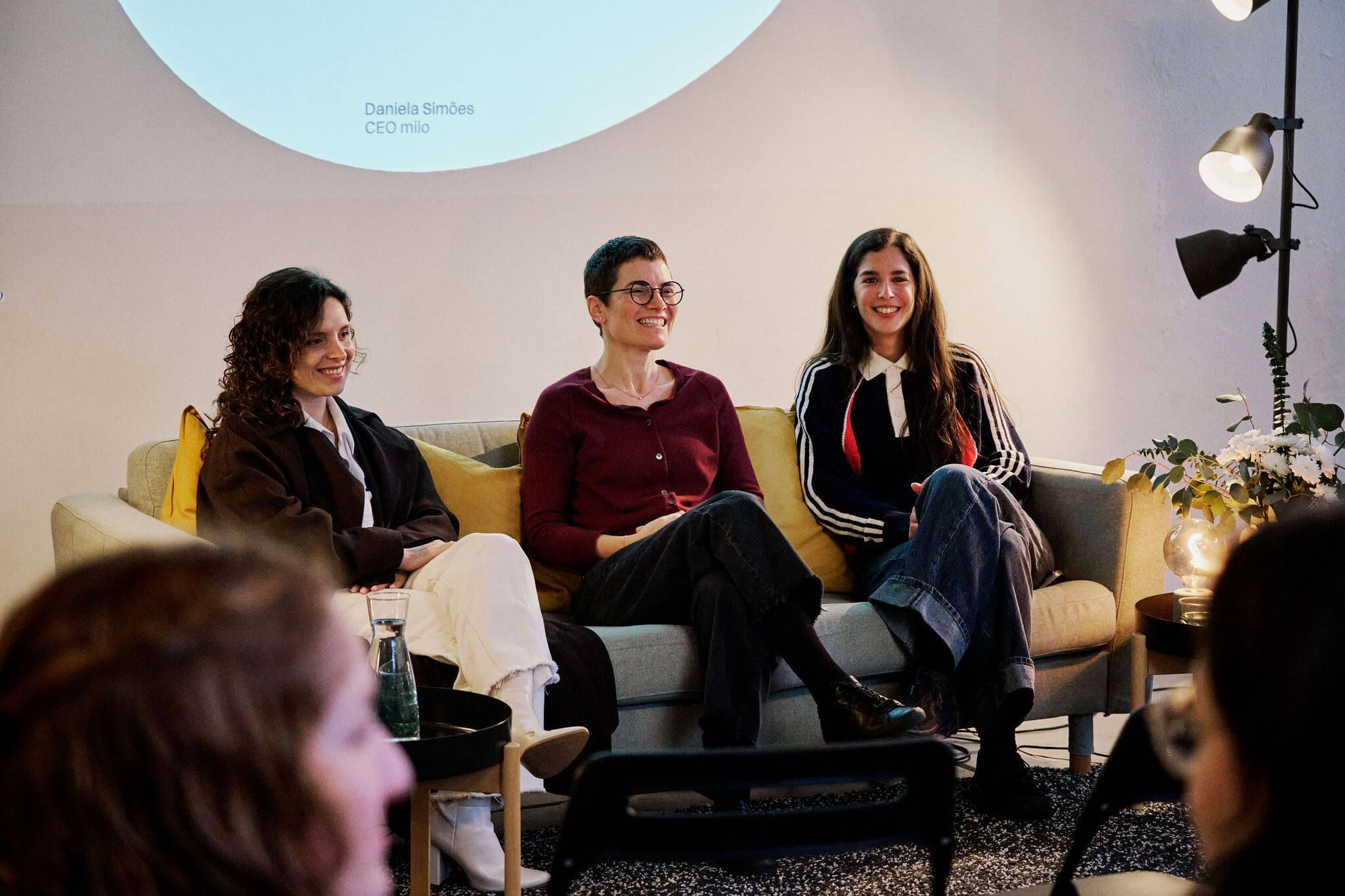
This is the third of three articles from Love at First Click, a conversation we hosted at Significa on 6th March 2026 with Daniela Simões (miio), Daniela Seixas (Tonic Easy Medical), and Beatriz Barros (mishmash).
When our conversation turned to AI during Love at First Click, something unexpected happened, as three founders running very different businesses, at very different scales, started finishing each other's sentences.
Daniela Seixas built Tonic AI, an AI copilot for clinical decision-making used by 200,000 doctors across four countries. Daniela Simões co-founded miio, an EV charging platform with 500,000 users and a customer support team of three. Beatriz Barros runs mishmash, a stationery brand sold in over 100 stores worldwide, including the Guggenheim in New York, with a total team of three people.
Their industries have almost nothing in common, but their experience with AI tells a surprisingly similar story. They're adopting it, they see its value, and they're all still working out where its limits are, openly and without pretending to know otherwise.
Embracing AI.
The way a company introduces AI to its team tends to shape whether people adopt or quietly resist it.
Daniela Simões was deliberate about how AI entered miio's day-to-day.
“We framed AI to our team as: you have this tool that lets you do your work faster, better. It's here to empower you, not replace you.”
Daniela Simões
Founder of miio
At miio, the support team's reaction was telling. Within a team of three people serving half a million users across seven countries, gratitude replaced fear, since this technology arrived as genuine relief for them, helping them filter requests and follow up on simpler ones faster.
Daniela Seixas came at the same question from another side. Tonic AI is an AI assistant for medical professionals, which means the empowerment question plays out on both sides of their product: doctors need to trust AI-assisted clinical suggestions enough to integrate them into their practice, and Tonic Easy Medical’s own team needs to trust new AI capabilities enough to rebuild their processes around them.
And that rebuilding has been substantial. In 2022, when ChatGPT launched and rewrote public expectations overnight, Tonic Easy Medical, had to scrap their entire market positioning and start over. Daniela declared it a "Foundation Year," dedicated to rebuilding the company around capabilities that simply didn't exist when they started. CE certification, ISO compliance, ISO 42001 for AI management: the regulatory work alone would keep most founders busy full-time, but Daniela sees it as proof that the technology is serious enough to warrant proper governance.
“Running a five-person company is one thing… Twenty-five is another. Fifty is another. I've had to reinvent myself as CEO several times.”
Daniela Seixas
Founder of Tonic Easy Medical
Her advice on adoption is characteristically direct. She believes companies need to pursue deep integration rather than surface-level experimentation, and she's candid about the fact that there's no established method for doing this well. The companies making progress are the ones willing to start before they have all the answers or even a complete plan.
What AI can't do.
Beatriz Barros occupies an interesting position in this conversation, because mishmash is a brand built on something AI has no access to: the physical experience of touching, holding, and using beautifully made stationery. Getting people who had largely stopped using paper to fall in love with it again requires an obsession with how things feel in your hands, and that kind of sensory judgement lives entirely outside what any model can replicate.
Her perspective on AI and creativity extends beyond her own product, though. When Daniela Seixas talked about building Tonic Easy Medical's brand through a dedicated creative process with an external agency, and said she would never trade that human creative process for an AI-generated one ("Never," she repeated, for emphasis), Beatriz was nodding along.
What both founders are getting at, from very different vantage points, is that AI handles speed and scale well, but the decisions that actually define a business require something else. Namely, the judgement to know which option is right for a specific moment, for a specific user, or for a specific set of circumstances. Tonic AI can surface clinical evidence and suggest diagnostic pathways, saving doctors significant time, but the conversation with the patient and the weighing of personal circumstance remain deeply human skills. The same is true of Beatriz's instinct for product direction, and of miio's decision to publish an open letter during the 2022 energy crisis rather than quietly adjusting their pricing.
As more mechanical work gets automated, these human capabilities won't diminish. If anything, they’ll become the clearest differentiator between one company and another.
When is the right time to start a business?
On the first article of this series, we explore why there’s no such thing as perfect timing.
Navigating change.
The most refreshing part of this conversation was the founder’s honesty regarding where they stand in this new technological landscape. While Tonic Easy Medical is in the middle of rebuilding its processes, miio is learning, in real time, where AI-assisted support works well and where human intervention is still needed. On the other hand, mishmash is finding a balance between tools that extend what a small team can do, and the analogue feel their customers crave.
The loudest voices in the AI conversation tend to deal in certainties, either utopian or catastrophic, but the reality these three founders described is more textured and nuanced than that. AI is changing what their work looks like and shifting where human effort creates the most value, and they're each navigating that shift in ways that reflect their own businesses, their own teams, and their own tolerance for experimentation. What they share is a willingness to be honest about the parts they haven't solved yet, and to keep going anyway.
Ana Fernandes
Brand Manager
While others struggle to keep up, Ana effortlessly leaps from one thing to the next in a turbo-charged, blazing fast, whirlwind of flaming ideas and effortless creativity. After a couple of years managing projects, Ana moved into brand & product marketing. Now she shapes how Significa communicates with the world, keeping our voice clear, consistent, and genuinely ours.
We build and launch functional digital products.
Related articles
Rui Sereno
CEO
Rui Sereno
CEO
Rui Sereno
CEO
10 August 2026
•
4 min read